
Bit Boss
Unknown Artist
first half 17th century
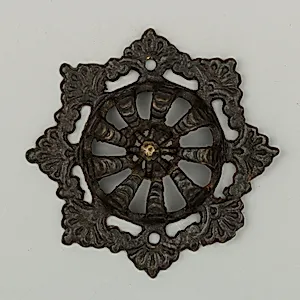
Medium
Copper alloy
Dimensions
Diam. 3 3/16 in. (8.1 cm); Wt. 2.5 oz. (72 g)
Classification
Equestrian Equipment-Bits
Culture
probably Netherlandish
Department
Arms and Armor
Museum
Metropolitan Museum of Art, New York, NY
Credit
Gift of Stephen V. Grancsay, 1942
Accession Number
42.50.220
Rights
Public Domain
Art Historical Context
Behold the *Bit Boss*, a finely piece of equestrian equipment from the first half of the 17 century, likely produced in the Netherlands. This small copper alloy disk, measuring just 3 3/16 inches (8.1 cm) in and weighing 2. ounces (72 g), served as a decorative element on a horse's bit—the metal mouthpiece essential for controlling cavalry mounts or riding horses. Displayed in the Metropolitan Museum of Art's Arms and Armor Department, it was generously gifted by Stephen V. Grancsay in 1942. In the turbulent era of the Dutch Revolt and the Eighty Years' War, Netherlandish metalworkers excelled in functional yet ornate arms and armor, blending utility with artistry. Horse bits like this one were vital for military horsemen, but bosses added flair, signaling the rider's status through intricate designs cast or hammered from durable copper alloy. This medium was prized for its malleability, allowing detailed engravings or piercings that caught the light during parades or battles. Today, this unassuming artifact reveals the sophisticated equestrian culture of 17th-century Europe, where even horse tack embodied craftsmanship and prestige. A testament to anonymous skilled hands, it invites us to imagine thundering hooves on cobblestone streets or misty battlefields.