
Bit Boss with Hercules Fighting the Monster Cacus
Unknown Artist
second half 16th century
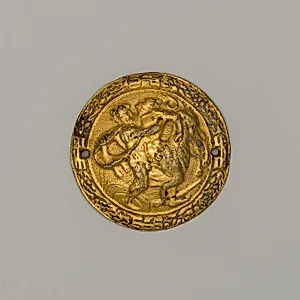
Medium
Copper alloy, gold
Dimensions
Diam. 2 1/4 in. (5.7 cm); Wt. 1.7 oz. (48 g)
Classification
Equestrian Equipment-Bits
Culture
South German, possibly Augsburg
Department
Arms and Armor
Museum
Metropolitan Museum of Art, New York, NY
Credit
Gift of Stephen V. Grancsay, 1942
Accession Number
42.50.166
Rights
Public Domain
Tags
Art Historical Context
This exquisite bit boss, crafted in the second half of the16th century from copper alloy and adorned with gold, exemplifies the masterful metalworking of South Germany—possibly Augsburg, a renowned hub for Renaissance goldsmiths and armorers. Measuring just 2¼ inches in diameter and weighing a mere 1.7 ounces, it formed part of a horse's bit in equestrian equipment, blending functionality with opulent decoration. Such lavish bits were status symbols for nobility, transforming everyday riding gear into wearable art. The boss features a dynamic relief scene of Hercules battling the fire-breathing monster Cacus, drawn from classical mythology. In the legend, Cacus stole Hercules' cattle and hid them in a cave; the hero slew the giant in a fierce confrontation, symbolizing triumph over chaos. This popular Renaissance motif reflects the era's revival of ancient tales, often etched or chased into metal to showcase technical virtuosity—fine detailing, gilding for contrast, and a narrative compressed into a tiny, curved surface. Housed in The Metropolitan Museum of Art's Arms and Armor Department (gift of Stephen V. Grancsay, 1942), this artifact highlights how 16th-century craftsmen elevated martial accessories with humanistic themes, bridging utility, myth, and artistry for elite riders.