
Bit Bosses
Unknown Artist
16th century
Medium
Copper, enamel, silver, gold
Dimensions
14.25.1803b; Diam. 3 3/4 in. (9.5 cm); Wt. 1.1 oz. (31.2 g); 14.25.1803c; Diam. 3 3/4 in. (9.5 cm); Wt. 0.8 oz. (22.7 g)
Classification
Equestrian Equipment-Bits
Culture
German
Department
Arms and Armor
Museum
Metropolitan Museum of Art, New York, NY
Credit
Gift of William H. Riggs, 1913
Accession Number
14.25.1803b, c
Rights
Public Domain
Tags
Art Historical Context
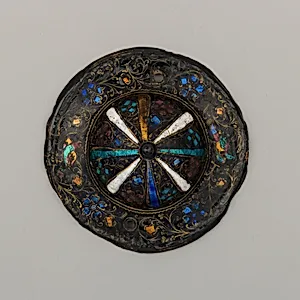
Step into the world of 16th-century equestrian finery with *Bit Bosses*, a of exquisite decorative elements from a horse's bit. Crafted from copper inlaid with vibrant enamel, silver, and, these circular bosses—each measuring 3 3/4 inches (9.5 cm) in—adorned the shanks of a bridle bit used to control cavalry mounts. Measuring just 1.1 oz. and 0.8 oz., their lightweight yet intricate design speaks to the blend of functionality and luxury in Renaissance arms and armor. In Germanic culture of the 1500s, such opulent equestrian gear was reserved for nobility and knights, symbolizing status on the battlefield or during tournaments. The enameling technique—fusing powdered glass with metal at high temperatures—created enduring, jewel-like colors and motifs, including birds, which may evoke falconry or heraldic symbols of power and nobility. This mastery of mixed media highlights the era's advanced metalworking, bridging utility with artistry. A gift to the Metropolitan Museum of Art from William H. Riggs in 1913, these bosses offer a glimpse into the splendor of mounted warfare, where even a horse's tack became a canvas for cultural prestige.