
Bit
c. 1936
Medium
watercolor, pen and ink, and gouache on paper
Dimensions
overall: 35.4 x 26.7 cm (13 15/16 x 10 1/2 in.)
Classification
Index of American Design
Department
CG-W
Museum
National Gallery of Art, Washington, D.C.
Credit
Index of American Design
Accession Number
1943.8.14633
Rights
Public Domain
Art Historical Context
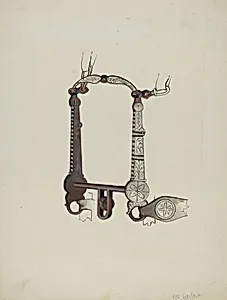
"Bit" by William Herbert, created around 1936, is a rendering of an American horse bit—a functional yet elegantly crafted piece of equestrian tack central to everyday rural life. Executed in watercolor, pen and ink and gouache on paper35.4 x 26.7 cm), the work showcases Herbert's skill in capturing fine metalwork details, from the bit's curved shanks and mouthpiece to subtle patina and engravings. These mixed media techniques allowed for precise line work alongside vibrant yet realistic color, making the object leap off the page with lifelike precision. This artwork is part of the Index of American Design, a groundbreaking WPA Federal Art Project (1935–1942) during the Great Depression. Commissioned to document and celebrate America's folk art and decorative traditions, the Index employed artists like Herbert to produce over 15,000 watercolor renderings of everyday objects, preserving cultural heritage amid economic hardship. "Bit" exemplifies this mission, highlighting the craftsmanship of utilitarian tools that embodied American ingenuity and pioneer spirit. Housed in the National Gallery of Art's collection, it invites visitors to appreciate how ordinary items reflect broader historical narratives—from frontier horsemanship to industrial design influences. A testament to artistic documentation, it bridges art and history, reminding us of the beauty in the functional.