
Blackwork Design for Goldsmithwork
after 1616
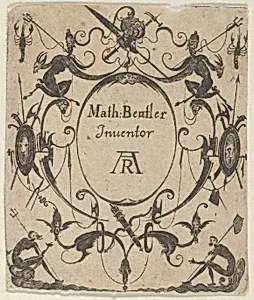
Medium
Engraving and blackwork
Dimensions
Sheet: 2 1/8 × 1 13/16 in. (5.4 × 4.6 cm)
Classification
Prints|Ornament & Architecture
Department
Drawings and Prints
Museum
Metropolitan Museum of Art, New York, NY
Credit
Harris Brisbane Dick Fund, 1924
Accession Number
24.69.7
Rights
Public Domain
Tags
Art Historical Context
Step into the intricate world of 17th ornamental design with *Blackwork Design for Goldsmithwork by Mathais Beitler created after 1616. Thisutive engraving, measuring just 2 1/8 × 1 13/16 inches, served as a precise pattern for goldsmiths crafting luxurious metalwork. Housed in the Metropolitan Museum of Art's Drawings and Prints department, it exemplifies the era's fascination with elaborate decoration, blending utility with artistic flair. Beitler's masterful use of engraving and blackwork—a technique of fine, cross-hatched lines creating rich tonal depth—brings to life a whimsical array of grotesques, mythical creatures, and even lobsters. These fantastical motifs, rooted in Renaissance revival of ancient Roman "grotesque" styles, were popular in Northern European prints for inspiring jewelry, frames, and architectural details. The dense blackwork not only mimics the sheen of polished metal but also allowed artisans to scale up the tiny design for opulent objects. This print highlights the collaborative spirit of early modern decorative arts, where printed patterns democratized high-end craftsmanship. Acquired through the Harris Brisbane Dick Fund in 1924, it offers a window into how mythical whimsy adorned everyday luxury, bridging art and craft in the Baroque age.