
Blade and Mounting for a Dagger (Tantō)
blade, dated 1525; mounting, 19th century
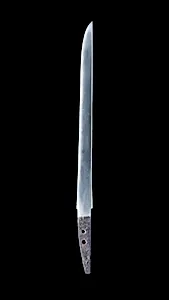
Medium
Steel, wood, copper-gold alloy (shakudō), copper-silver alloy (shibuichi), gold, lacquer, rayskin (samé), silk, abalone shell, silver
Dimensions
L. 17 in. (43.2 cm); L. of blade 13 7/16 in. (34.2cm); L. of cutting edge 10 1/16 in. (25.6 cm)
Classification
Daggers
Culture
Japanese
Department
Arms and Armor
Museum
Metropolitan Museum of Art, New York, NY
Credit
Gift of Brayton Ives and W. T. Walters, 1891
Accession Number
91.2.54
Rights
Public Domain
Art Historical Context
This exquisite *Blade and Mounting for a Dagger (Tantō exemplifies the masterful fusion of lethal and artistic refinement in Japanese and armor. The blade, forged by the skilled smith Toshimasa dated 1525 during the Muromachi period measures an impressive 13 716 inches long with a razor-sharp cutting edge 10 1/16 inches. Its th-century mounting, attributed to artisans from the renowned Kajikawa school and Kuniyoshi, elevates it to a wearable work of art, housed today in the Metropolitan Museum of as a gift from Brayton Ives and W T. Walters in 1891. Tantō daggers were essential to samurai warriors, used for close combat or ritual seppuku, symbolizing both martial prowess and aesthetic harmony. Crafted from high-carbon steel, the blade showcases the era's advanced metallurgy, folded and hammered for exceptional strength and a hamon (temper line) that highlights its beauty. The fittings blend shakudō (copper-gold alloy) and shibuichi (copper-silver alloy) with gold inlays, lacquer, rayskin (samé) for grip, silk wrappings, abalone shell, and silver—techniques perfected by Kajikawa metalworkers to depict motifs like dragons or waves, evoking nature's power. As a cultural treasure, this tantō bridges centuries, reflecting Japan's enduring wabi-sabi ethos where impermanence and beauty coexist in weapons of war. Visitors will appreciate its tactile details, from the shimmering alloys to the iridescent shell, inviting reflection on the samurai's dual life of discipline and artistry.