
Blade and Mounting for a Sword (Katana)
blade, dated 1440; mounting, late 18th century
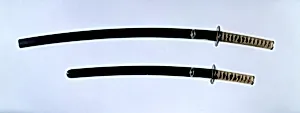
Medium
Steel, wood, lacquer, ray skin (samé), thread, copper-gold alloy (shakudō), copper-silver alloy (shibuichi)
Dimensions
L. 36 1/2 in. (92.7 cm); L. of blade 30 11/16 in. (77.9 cm); L of cutting edge 24 13/16 in. (63.1 cm); D. of curvature 11/16 in. (1.8 cm)
Classification
Swords
Culture
Japanese
Department
Arms and Armor
Museum
Metropolitan Museum of Art, New York, NY
Credit
The Howard Mansfield Collection, Gift of Howard Mansfield, 1936
Accession Number
36.120.417a, b
Rights
Public Domain
Art Historical Context
This exquisite *Blade and Mounting for a (Katana)* showcases the pinnacle of Japanese sword-making across centuries. The blade, forged by the renowned Sukemitsu of Bizen 1440 during the Muromachi period exemplifies the Bizen school's mastery of steel tempering. At 30 11/16 inches long a 24 13/16-inch cutting edge, its subtle 11/16-inch curvaturesori) balances lethal sharpness with elegant form, ideal for the samurai warrior. The late 18th-century mounting by Iwamoto Konkan elevates the weapon into a work of art. Crafted from lacquered wood, ray skin (samé) for grip, and ornate alloys like shakudō (copper-gold) and shibuichi (copper-silver), it reflects Edo-period refinement. These fittings, often featuring intricate chasing or inlays, transformed functional arms into status symbols during peacetime. As a cultural icon, the katana embodied bushido—the samurai code of honor and loyalty. Gifted to the Metropolitan Museum of Art from the Howard Mansfield Collection in 1936, this piece bridges battlefield utility and aesthetic splendor, inviting visitors to ponder Japan's warrior heritage.
About the Artist
Sukemitsu of Bizen|Iwamoto Konkan (Japanese|Japanese) · 1400 |1744 –1500 |1801
Japanese, Bizen, Muromachi period, active ca. 1440|Japanese, Edo period, 1744–1801