
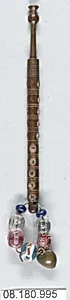
Bobbin
Unknown Artist
19th century
Medium
Wood, metal and beads
Classification
Textiles-Methods and Materials
Culture
British
Department
European Sculpture and Decorative Arts
Museum
Metropolitan Museum of Art, New York, NY
Credit
The Nuttall Collection, Gift of Mrs. Magdalena Nuttall, 1908
Accession Number
08.180.995
Rights
Public Domain
Tags
Art Historical Context
This exquisite 19th-century bobbin, crafted from wood, metal, and beads, offers a glimpse into the intricate world of British textile craftsmanship. Housed in the Metropolitan Museum of Art's of European Sculpture and Decor Arts, it exemplifies the tools essential for pillow lacemaking—a labor-intensive technique where threads are wound around bobbins and manipulated over a patterned pillow to create delicate lace motifs. Its classification under Textiles-Methods and Materials its role not as a finished artwork, but as a vital implement that bridged functionality and artistry. In Victorian Britain, bobbins like this one were often personalized with decorative elements, such as gleaming metal fittings and vibrant beads, reflecting the maker's pride and the era's fascination with ornamental domestic crafts. Lacemaking was a cherished skill among women, supporting both household economies and the booming lace trade that adorned fashionable garments across Europe. Though the artist remains unknown, the bobbin's survival speaks to its cultural value, preserved through The Nuttall Collection and gifted by Mrs. Magdalena Nuttall in 1908. Today, this modest yet masterful object reminds us how everyday tools embodied artistic ingenuity, inviting visitors to appreciate the hidden hands behind lace's ethereal beauty.