
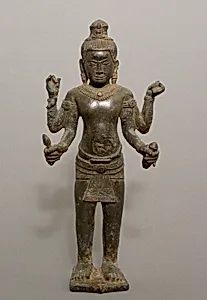
Bodhisattva Avalokiteshvara
Angkor period, late 12th–early 13th century
Medium
Bronze
Dimensions
21.1 × 9.5 × 5.2 cm (8 1/4 × 3 3/4 × 2 in.)
Classification
bronze
Department
Arts of Asia
Museum
Art Institute of Chicago
Accession Number
58541
Rights
Public Domain
Art Historical Context
This exquisite bronze statue of Bodhisattva Avalokhvara, crafted by Khmer artisans during the Angkor period (late 12th–early 13th century), embodies the compassionate spirit central to Mahayana Buddhism. Standing just over 8 inches tall, figure likely depicts the bodhisattva in a serene, meditative pose, adorned with intricate jewelry and flowing robes typical of Khmer iconography. Housed in the Art Institute of Chicago's of Asia department, it offers a rare glimpse into the Khmer Empire's mastery of sculpture at its zenith. The Angkor period marked the height of Khmer civilization in ancient Cambodia, renowned for monumental temples like Angkor Wat. Avalokiteshvara, known as the "Lord Who Looks Down" with boundless mercy, reflects the era's deep Buddhist devotion, especially under rulers who patronized such art. Bronze works like this were prestige objects, possibly used in royal rituals or temple worship, highlighting the empire's cultural and spiritual sophistication. Khmer bronzes, cast via the sophisticated lost-wax technique, showcase fluid lines, harmonious proportions, and delicate detailing that convey divine grace. This small-scale masterpiece (21.1 × 9.5 × 5.2 cm) underscores the portability and intimacy of devotional art, inviting viewers to connect with its timeless message of empathy.