
Bodhisattva Avalokiteshvara (Guanyin)
Unknown Artist
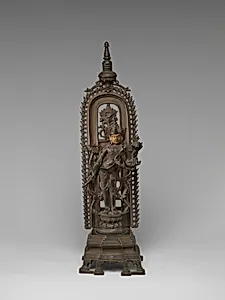
Medium
Leaded brass with pigment, lost-wax cast
Dimensions
H. 12 5/8 in. (32.1 cm); W. 3 5/8 in. (9.2 cm); D. 3 1/4 in. (9.3 cm)
Classification
Sculpture
Culture & Period
Tibet · Qing dynasty (1644–1911), Qianlong period (1736–95)
Department
Asian Art
Museum
Metropolitan Museum of Art, New York, NY
Credit
Bequest of Kate Read Blacque, in memory of her husband, Valentine Alexander Blacque, by exchange, 1948
Accession Number
48.30.15
Rights
Public Domain
Tags
Art Historical Context
This exquisite sculpture depicts Avalokiteshvara, the bodhisattva of infinite compassion in Tibetan Buddhism—known as Guanyin in Chinese traditions. Carved from leaded brass and adorned with traces of pigment, the figure stands about 12 tall, embodying serene grace with flowing robes, multiple arms symbolizing boundless aid to suffering beings, and a gentle expression inviting devotion. Crafted in Tibet during the Qianlong period (1736–95) of China's Qing dynasty, it reflects the era's cultural fusion, as the Manchu emperors patronized Tibetan Buddhism, blending imperial refinement with Himalayan spiritual depth. The lost-wax casting technique used here allowed for remarkable intricacy in the deity's jewelry, folds of cloth, and symbolic gestures, a method perfected over centuries in Asian metalwork for devotional art. This small, portable piece likely served private meditation or altar use, highlighting Buddhism's emphasis on personal enlightenment amid Tibet's rugged monastic life. Housed in the Metropolitan Museum of Art's Asian Art department, this bequest from 1948 offers a window into 18th-century Tibetan artistry, where compassion was visualized in enduring bronze, reminding visitors of art's power to evoke empathy across cultures.