
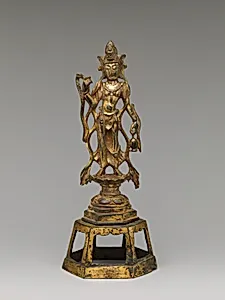
唐 鎏金青銅觀音菩薩像|Bodhisattva Avalokiteshvara (Guanyin)
Unknown Artist
late 7th–early 8th century
Medium
Gilt bronze
Dimensions
H. 9 1/16 in. (23 cm)
Classification
Sculpture
Culture & Period
China · Tang dynasty (618–907)
Department
Asian Art
Museum
Metropolitan Museum of Art, New York, NY
Credit
Fletcher Fund, 1933
Accession Number
33.91
Rights
Public Domain
Tags
Art Historical Context
This exquisite gilt bronze statue of Bodhisattva Avalokhvara, known as Guanyin in Chinese, hails from China's Tang dynasty (618–907), specifically the late 7th to 8th century. just 9 1/16 inches (23 cm) tall, it captures the bodhisattva in a graceful, contemplative pose, embodying boundless compassion—one of the most revered figures in Mahayana Buddhism. Crafted during the Tang era, a golden age of artistic flourishing and cultural exchange along the Silk Road, such sculptures were often used for personal devotion in homes or temples. The medium of gilt bronze highlights masterful Tang techniques: the figure was cast in bronze using the lost-wax method, then meticulously overlaid with a thin gold layer via mercury gilding, creating a radiant, jewel-like sheen that symbolized divine purity. Tang Buddhist art is renowned for its naturalistic forms, with flowing robes draping elegantly over a full, harmonious body, and a serene face conveying gentle wisdom—contrasting earlier, more stylized styles. As a testament to Buddhism's profound influence in Tang China, this Guanyin reflects the era's synthesis of Indian iconography with Chinese aesthetics, promoting ideals of mercy and enlightenment. Acquired through the Fletcher Fund in 1933, it now graces the Metropolitan Museum of Art's Asian Art collection, inviting visitors to ponder its timeless spiritual allure.