
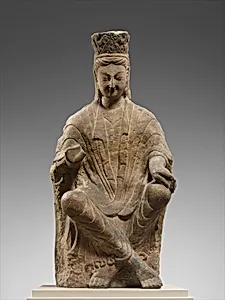
北魏 彩繪石雕交腳菩薩像 (彌勒)|Bodhisattva (Maitreya) with crossed ankles
Unknown Artist
ca. 470–80
Medium
Sandstone with traces of pigment
Dimensions
H. 57 1/2 in. (146.1 cm)
Classification
Sculpture
Culture & Period
China · Northern Wei dynasty (386–534)
Department
Asian Art
Museum
Metropolitan Museum of Art, New York, NY
Credit
Rogers Fund, 1922
Accession Number
22.134
Rights
Public Domain
Tags
Art Historical Context
This striking sandstone sculpture of Maitreya, the Bodhisattva of the Future Buddha, hails from China's Northern Wei dynasty (386–534 CE), dated around 470–80 CE. Standing at an impressive 57 1/2 inches tall, the figure is depicted seated with crossed ankles in a relaxed yet regal pose, embodying serenity and compassion. Traces of original pigment reveal it was once vividly colored—a common technique in early Buddhist art to make stone carvings come alive with divine radiance, drawing worshippers into the spiritual realm. Crafted during the Northern Wei period, when the dynasty's Tuoba rulers embraced Buddhism, this piece reflects the era's artistic flowering. Northern Wei sculptures, often from cave temples like Yungang, feature elongated proportions and flowing drapery that convey ethereal grace. The use of durable sandstone ensured longevity for these devotional icons, placed in temples to inspire faith and meditation. As a rare survivor with pigment remnants, this Bodhisattva highlights the fusion of artistry and piety in fifth-century China, offering visitors a window into Buddhism's transformative role in shaping imperial culture. Acquired through the Rogers Fund in 1922, it remains a gem in the Metropolitan Museum of Art's Asian Art collection.