
Bodice
Unknown Artist
early 19th century
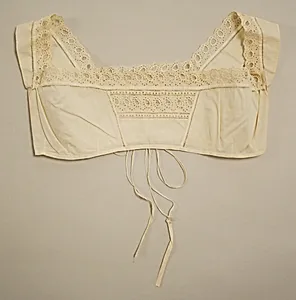
Medium
cotton
Classification
Bodice
Culture
American
Department
Costume Institute
Museum
Metropolitan Museum of Art, New York, NY
Credit
Bequest of Maria P. James, 1910
Accession Number
11.60.262
Rights
Public Domain
Art Historical Context
Step into the elegant world of early 19-century American fashion with this delicate cotton bodice, a charming survivor from the Costume Institute at The Metropolitan Museum of Art. to the early 1800s, this fitted upper garment—typically worn as part of a woman's dress—exemplifies the high-waisted, neoclassical silhouettes inspired by the Revolutionary era's embrace of simplicity and classical ideals. Though crafted by an unknown artist, preservation through the bequest of Maria P. in 1910 offers a tangible link to everyday American life during a time of national growth and expanding textile industries. Cotton, the bodice's primary medium, holds special significance in this context. By the early 19th century, innovations in cotton production—fueled by the cotton gin and Southern plantations—made the fabric affordable and ubiquitous in the United States, shifting wardrobes from imported silks to homegrown staples. This piece likely reflects middle-class aspirations, blending practicality with refined style for social occasions or daily wear. As a cultural artifact, the bodice whispers stories of American women navigating post-independence identity, where fashion mirrored ideals of republican virtue and emerging consumerism. Visitors, imagine slipping it on to dance at a Federal-era ball—its lightweight cotton promising comfort amid corseted elegance.