
"Book of Dimma" Shrine
Unknown Artist
early 20th century (original dated 11th century)
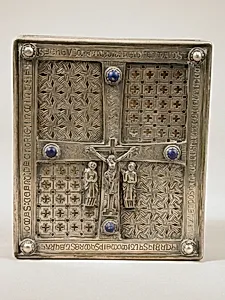
Medium
Bronze gilt, jewels
Dimensions
Overall: 7 7/8 x 2 1/2 x 6 3/4in. (20 x 6.4 x 17.1cm)
Classification
Reproductions-Metalwork
Culture
Irish
Department
Medieval Art
Museum
Metropolitan Museum of Art, New York, NY
Credit
Rogers Fund, 1908
Accession Number
08.23.3
Rights
Public Domain
Tags
Art Historical Context
Welcome to the Medieval Art gallery at the Metropolitan Museum of Art where the "Book of Dimma Shrine captivates with its shimmering bronze gilt surface adorned with jewels. This exquisite reproduction, crafted in the early 20 century, faithfully recreates an original 11th-century Irish metalwork shrine known as a *cumdach*—a protective case for sacred manuscripts like the 8th-century Book of Dimma, a Gospel book attributed to St. Dimma. Measuring just 7⅞ x 2½ x 6¾ inches, its compact form belies its grandeur, evoking the artistry of Ireland's Golden Age of monastic metalworking. Irish medieval shrines like this one were masterpieces of repoussé and filigree techniques, where thin sheets of gilt bronze were hammered into intricate reliefs and embellished with colorful gems and enamel. The shrine's iconography centers on the Crucifixion of Christ, a motif blending Celtic ornamental patterns with early Romanesque Christian symbolism, highlighting Ireland's role as a vibrant center of faith and craftsmanship during the Viking Age and beyond. Acquired through the Rogers Fund in 1908, this piece bridges ancient devotion with modern appreciation. Step closer (virtually!) to admire how the jewels catch the light, mirroring the originals' role in liturgical treasures—portable altars carried in processions, safeguarding holy texts amid turbulent times. A testament to Ireland's enduring spiritual legacy!