
Book of Hours
ca. 1530–35
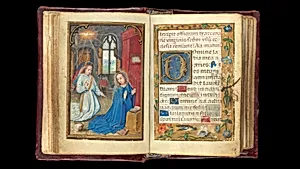
Medium
Tempera, gold, and ink on parchment; modern red leather binding
Dimensions
Manuscript: 2 9/16 × 2 1/16 × 1 1/8 in. (6.5 × 5.2 × 2.9 cm) Folio: 2 5/16 × 1 5/8 in. (5.9 × 4.2 cm) Illumination only: 1 7/8 × 1 5/16 in. (4.8 × 3.4 cm) Text area: 1 7/16 in. × 1 in. (3.6 × 2.6 cm)
Classification
Manuscripts and Illuminations
Culture
Netherlandish
Department
The Cloisters
Museum
Metropolitan Museum of Art, New York, NY
Credit
The Cloisters Collection, 2015
Accession Number
2015.706
Rights
Public Domain
Tags
Art Historical Context
This delicate *Book of Hours* by Bening, created around 1530–35, exemplifies the pinnacle of Netherlandish illumination from the Ghent-Bruges school. These pocket-sized devotional manuscripts were cherished by laypeople during the late Middle Ages and Renaissance, personalized prayers for the eight canonical "hours" of the day, alongside calendars, psalms, and Gospel excerpts. Bening, a master Flemish miniaturist and successor to his father Simon Marmion, this work in Bruges, where workshops produced some of Europe's finest illuminated books for nobility and clergy. Measuring just over 2 inches tall, the manuscript features vivid tempera paintings, shimmering gold leaf, and precise ink script on vellum parchment, bound today in modern red leather. Its minuscule illuminations—barely 2 by 1.5 inches—showcase Bening's virtuosity in depicting intimate biblical scenes like the Annunciation, Nativity, and Holy Family, surrounded by pastoral details: shepherds at work with cows, sheep, dogs, and horses. These lively vignettes blend spiritual devotion with everyday rural life, reflecting the era's fusion of faith and humanism. Housed in The Cloisters at the Metropolitan Museum of Art, this *Book of Hours* highlights the cultural role of such manuscripts as portable treasures, blending artistry, piety, and status in 16th-century Flanders. Visitors can marvel at how Bening captured divine narratives in a format small enough to carry to prayer.