
Bookbinding
Unknown Artist
17th century
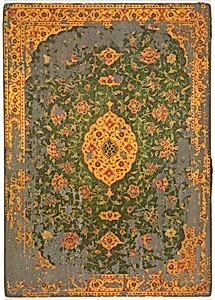
Medium
Leather on laminated paper board
Dimensions
H. 15 7/8 in. (40.3 cm) W. 11 1/4 in. (28.6 cm)
Classification
Codices
Department
Islamic Art
Museum
Metropolitan Museum of Art, New York, NY
Credit
Purchase, Rogers Fund and The Kevorkian Foundation Gift, 1955
Accession Number
55.121.10.44
Rights
Public Domain
Tags
Art Historical Context
This exquisite 17th-century book, crafted by an unknown artist, hails from the Islamic Art collection at Metropolitan Museum of Art. Measuring 15 7/8 by 11 1/4 inches, it features a traditional medium of leather over laminated paper board—a durable construction designed to protect precious codices, or bound manuscripts. Adorned with floral motifs (as suggested by its tags), it exemplifies the artistry invested in everyday functional objects within Islamic traditions. In the 17th century during the height of Ottoman, Persian, and Mughal empires, bookbindings transformed simple covers into masterpieces. These were often tooled, painted, or embossed with intricate designs, reflecting the reverence for knowledge and the written word in Islamic culture. Codices housed religious texts like the Quran or literary works, making their bindings symbols of piety and refinement. The use of leather allowed for rich surface decoration, while the laminated board provided structural integrity for repeated handling. Acquired through the Rogers Fund and The Kevorkian Foundation Gift in 1955, this piece invites us to appreciate how floral patterns evoked gardens of paradise, blending utility with spiritual beauty in everyday devotion.