
Boot van Dai-ko-ku
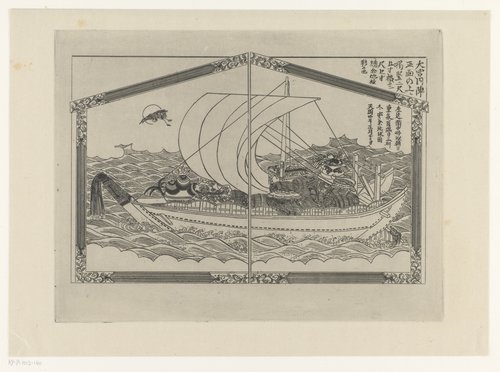
Medium
etching
Dimensions
265; 352
Rights
Public Domain
About this artwork
plaatrand: hoogte 265 mm x breedte 352 mm
Art Historical Context
Félix Hilaire Buh's *Boot van Dai-ko* (1883) is a captivating etching measuring 265 mm high by 352 mm wide, showcasing the artist's mastery of intaglio printmaking. Buhot, a prominent French engraver of the late 19th, was renowned for his intricate, atmospheric etchings that blended European techniques with exotic inspirations. This work, likely translating to "Boat of Daikoku" Dutch—referencing the Japanese god of wealth—exemplifies his fascination with Japonisme, the European craze for Japanese art during the fin-de-siècle. Created amid the etching revival in France, Buhot employed innovative methods like drypoint, aquatint, and layered inking to achieve rich textures and luminous effects on the metal plate. The precise plate dimensions (plaatrand) highlight the technical precision of the medium, allowing for detailed reproductions that rivaled paintings in depth. Etching's acid-etched lines enabled Buhot to capture fleeting moods and intricate compositions, making prints accessible yet collectible. This piece reflects the cultural exchange of the era, as Western artists like Buhot drew from ukiyo-e prints flooding Paris markets. Its whimsical subject invites visitors to ponder the fusion of myth and modernity, a hallmark of Buhot's legacy in bridging worlds through print.