
Bootees
Unknown Artist
1840–60
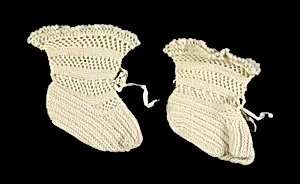
Medium
Wool, silk
Classification
Bootees
Culture
American
Department
Costume Institute
Museum
Metropolitan Museum of Art, New York, NY
Credit
Brooklyn Museum Costume Collection at The Metropolitan Museum of Art, Gift of the Brooklyn Museum, 2009; Gift of Louise M. Coleman, 1941
Accession Number
2009.300.4348a, b
Rights
Public Domain
Art Historical Context
Step into the intimate world of 19th-century American domestic life with *Bootees*, a delicate pair of infant footwear crafted between 1840 and 1860. These tiny shoes, from the Costume Institute at The Metropolitan Museum of Art, embody the everyday artistry of American homemakers during the antebellum and early Civil War eras. Produced anonymously, they reflect the cultural emphasis on handcrafted garments for babies, blending practicality with quiet elegance in a time when infant mortality was high and protective clothing held deep emotional value. Made from wool and silk, the bootees showcase skilled needlework techniques like knitting or crocheting, which were hallmarks of women's domestic labor. Wool provided warmth and durability for chilly winters, while silk added a luxurious sheen, hinting at the maker's access to finer materials—perhaps a gift or heirloom item. Such pieces highlight the textile traditions of early American culture, where clothing wasn't just functional but a canvas for personal expression and family legacy. Today, these bootees offer a poignant glimpse into the tenderness of Victorian-era childcare, preserved through the Brooklyn Museum Costume Collection's gift to the Met in 2009. They remind us how small objects can weave big stories of resilience and affection.