
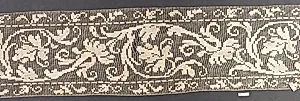
Border
Unknown Artist
16th–17th century
Medium
Embroidered net
Dimensions
H. 37 x W. 8 inches (94.0 x 20.3 cm)
Classification
Textiles-Laces
Culture
Italian
Department
European Sculpture and Decorative Arts
Museum
Metropolitan Museum of Art, New York, NY
Credit
Anonymous Gift, 1879
Accession Number
79.1.120
Rights
Public Domain
Art Historical Context
This exquisite *Border*, crafted by an unknown Italian artist in the 16th or 17th century, exemplifies the pinnacle of Renaissance-era lace-making. Measuring 37 inches high by 8 inches wide, this narrow strip of embroidered net was likely designed for adorning garments, such as collars, cuffs, or ecclesiastical vestments. Its delicate construction highlights the technical mastery of Italian lacemakers, who wove intricate patterns directly onto a fine net ground using needle embroidery—a labor-intensive technique that transformed simple thread into wearable art. Housed in the Metropolitan Museum of Art's Department of European Sculpture and Decorative Arts (an anonymous gift from 1879), the piece reflects Italy's dominance in lace production during this period. Centers like Venice and Milan were renowned for such textiles, which symbolized wealth and piety. The embroidered motifs, though subtle in scale, showcase the era's floral and geometric motifs, blending functionality with opulent decoration. As a classified textile-lace, *Border* offers a window into daily opulence and craft innovation, reminding us how everyday adornments carried profound cultural weight in early modern Europe. Visitors, imagine draping this over a velvet gown—pure Renaissance splendor!