
Border
Unknown Artist
18th century
Medium
Bobbin lace
Dimensions
L. 13 x W. 2 3/4 inches (33.0 x 7.0 cm)
Classification
Textiles-Laces
Culture
Italian, Abruzzi
Department
European Sculpture and Decorative Arts
Museum
Metropolitan Museum of Art, New York, NY
Credit
The Nuttall Collection, Gift of Mrs. Magdalena Nuttall, 1908
Accession Number
08.180.592
Rights
Public Domain
Tags
Art Historical Context
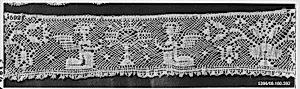
This delicate bobbin lace border, crafted in 18th-century Italy's Abruzzi region, exemplifies the region's renowned lace-making heritage. Measuring 13 by 2¾ inches, this narrow strip likely adorned garments, furnishings, or ecclesiastical textiles, showcasing the intricate artistry of anonymous skilled artisans. The presence of angel motifs, a common theme in Italian decorative arts, evokes a sense of celestial grace, blending spiritual symbolism with everyday luxury. Bobbin lace, or *punto Abruzzo*, was created by twisting and intertwining threads on a pillow with bobbins, allowing for precise, geometric patterns and figural designs like these angels. In the 18th century, Abruzzi lace was prized across Europe for its durability and fine detail, often produced by women in rural communities as both a craft and economic staple. This technique highlighted technical virtuosity, where each picot and braid demanded patience and expertise. A gift to the Metropolitan Museum of Art from The Nuttall Collection in 1908, this piece preserves a fragment of Italy's textile legacy. Visitors can appreciate how such laces bridged folk tradition and high fashion, offering a tactile glimpse into 18th-century life.