
Border
Unknown Artist
18th century
Medium
Silk on linen
Dimensions
L. 23 x W. 15 1/2 inches (58.4 x 39.4 cm)
Classification
Textiles-Embroidered
Culture
Greek Islands, Crete
Department
European Sculpture and Decorative Arts
Museum
Metropolitan Museum of Art, New York, NY
Credit
Bequest of Richard B. Seager, 1926
Accession Number
26.34.46
Rights
Public Domain
Tags
Art Historical Context
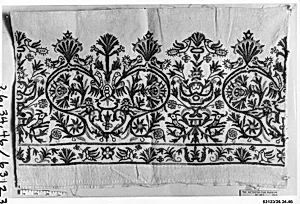
This exquisite embroidered border, in the 18th by an unknown artist from Crete in the Greek Islands, showcases the masterful textile traditions of the region. Measuring 23 by 15½ inches, it features silk threads worked onto a linen ground, a luxurious combination that highlights the skill of local embroiderers. Vibrant motifs of animals and birds—common in Cretan folk art—adorn the piece, likely intended as a decorative edge for garments, linens, or household furnishings, evoking the natural world and everyday life. During the 18th century, Crete's embroidery flourished under Ottoman influence while preserving Byzantine roots, blending intricate stitching techniques like counted thread work and surface embroidery. Silk's sheen against linen's sturdy weave added opulence, making such pieces prized heirlooms symbolizing craftsmanship and cultural identity. These textiles were often created by women in island communities, passing down patterns that celebrated flora, fauna, and geometric motifs. Now housed in the Metropolitan Museum of Art's Department of European Sculpture and Decorative Arts, this border entered the collection through the 1926 bequest of Richard B. Seager. It offers visitors a tactile glimpse into Mediterranean decorative arts, reminding us of the artistry woven into daily life centuries ago.