
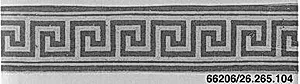
Border
Unknown Artist
early 19th century
Medium
Cotton
Dimensions
L. 16 1/2 x W. 1 1/2 inches 41.9 x 3.8 cm
Classification
Textiles-Printed
Culture
French
Department
European Sculpture and Decorative Arts
Museum
Metropolitan Museum of Art, New York, NY
Credit
Gift of William Sloane Coffin, 1926
Accession Number
26.265.104
Rights
Public Domain
Art Historical Context
This exquisite cotton border, crafted by an unknown French artist in the early 19th, exemplifies the refined textile artistry of Napoleonic-era France. Measuring a slender 16½ by 1½ inches (41.9 x 3.8 cm), it was likely designed as a decorative trim for garments, furnishings, or upholstery, showcasing the period's growing fascination printed fabrics. Housed the Metropolitan Museum of Art Department of European Sculpture andative Arts, it entered the collection as a gift William Sloane Coffin in1926, highlighting early 20th-century American philanthropy toward preserving European decorative heritage. Printed textiles like this one were a hallmark of French innovation, employing techniques such as woodblock or early copperplate printing on cotton to create intricate patterns. During the early 1800s, France led Europe in textile production, with regions like Jouy-en-Josas producing scenic and floral motifs that adorned bourgeois homes and wardrobes. This border reflects that cultural shift toward accessible luxury, blending functionality with aesthetic appeal amid post-Revolutionary economic revival. Its survival offers a glimpse into everyday elegance, underscoring cotton's rise as a versatile medium that democratized decoration. Visitors can appreciate how such modest pieces wove artistry into daily life, bridging fine art and domestic craft.