
Border
Unknown Artist
early 19th century
Medium
Cotton
Dimensions
L. 16 3/4 x W. 2 3/4 inches 42.5 x 7.0 cm
Classification
Textiles-Printed
Culture
French
Department
European Sculpture and Decorative Arts
Museum
Metropolitan Museum of Art, New York, NY
Credit
Gift of William Sloane Coffin, 1926
Accession Number
26.265.105
Rights
Public Domain
Tags
Art Historical Context
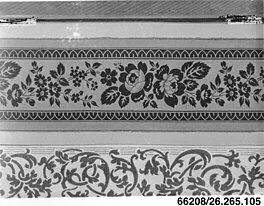
This delicate cotton border, produced by an unknown French artist in the early 19th century, exemplifies the refined textile artistry of post-Revolutionary France. Measuring just 16¾ by 2¾ inches (42.5 x 7 cm), its narrow width suggests it was designed as a trimming for garments, curtains, or upholstery, adding elegance to everyday luxury. Adorned with rose motifs—a timeless symbol of beauty and romance in European design—the piece reflects the era's fascination with floral patterns, which proliferated in printed textiles amid growing industrialization. Printed on cotton, a versatile and increasingly affordable medium thanks to advances in mechanized printing techniques like copperplate and roller printing, this border highlights France's leadership in decorative arts. During the Napoleonic and Restoration periods, such textiles democratized opulence, blending artisanal skill with emerging mass production to furnish bourgeois homes and wardrobes. Roses, often rendered in vibrant colors against light grounds, evoked the idyllic countryside, echoing Romantic ideals. Now housed in the Metropolitan Museum of Art's Department of European Sculpture and Decorative Arts—thanks to a 1926 gift from collector William Sloane Coffin—this modest artifact offers a window into 19th-century French taste, where even small borders carried cultural weight in domestic refinement.