
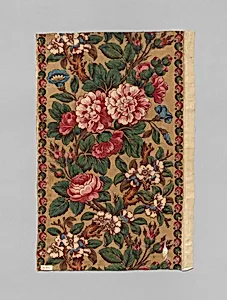
Border
Unknown Artist
ca. 1815
Medium
Cotton
Dimensions
L. 22 3/4 x W. 11 1/2 inches 57.8 x 29.2 cm
Classification
Textiles-Printed
Culture
British
Department
European Sculpture and Decorative Arts
Museum
Metropolitan Museum of Art, New York, NY
Credit
Gift of William Sloane Coffin, 1928
Accession Number
28.153.6
Rights
Public Domain
Tags
Art Historical Context
This delicate printed cotton border, created by an unknown British artist around 1815, exemplifies the refined textile arts of Regency-era Britain. Measuring 22¾ x 11½ inches, it features a charming pattern of roses and flowers, likely designed for adorning garments, furnishings, or upholstery edges. As a product of the burgeoning Industrial Revolution, such printed cottons were produced in factories using innovative techniques like copperplate printing or block printing, making floral motifs accessible to a wider middle class. The artwork's placement in the Metropolitan Museum of Art's European Sculpture and Decorative Arts Department highlights its role in everyday luxury. British textile mills, inspired by imported Indian chintz and botanical illustrations, popularized rose-heavy designs symbolizing beauty and the English garden tradition. Gifted by William Sloane Coffin in 1928, this border captures a moment when textiles transitioned from elite crafts to mass-produced elegance, blending artistry with emerging technology. Visitors will appreciate how such pieces reveal the cultural vibrancy of early 19th-century Britain, where flowers like roses evoked romance and national pride amid post-Napoleonic optimism.