
Border
Unknown Artist
19th century
Classification
Textiles-Woven
Culture
French
Department
European Sculpture and Decorative Arts
Museum
Metropolitan Museum of Art, New York, NY
Credit
Gift of The United Piece Dye Works, 1936
Accession Number
36.90.2319
Rights
Public Domain
Tags
Art Historical Context
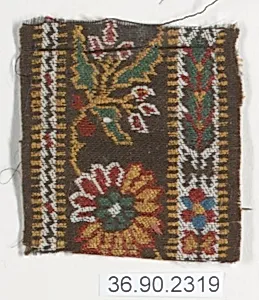
This exquisite woven textile border, created by an unknown French artist in the 19th century exemplifies the refined craftsmanship of European decorative arts. Classified as a textile, it features delicate floral motifs—a hallmark of the era's ornamental designs—likely intended as a trim for garments, upholstery, or furnishings. Housed in the Metropolitan Museum of Art's of European Sculpture and Decor Arts, it was generously gifted by The United Piece Dye Works 1936, highlighting enduring appreciation for such pieces among collectors. In 19th-century France, woven textiles like this border represented a pinnacle of artisanal skill, blending functionality with aesthetic elegance. The weaving technique allowed for intricate patterns that brought nature's beauty indoors, reflecting the Romantic fascination with flowers as symbols of grace and abundance. These borders often adorned bourgeois homes or high-fashion ensembles, underscoring France's leadership in textile innovation during the Industrial Revolution. Though the artist's identity remains a mystery, the border's survival speaks to its cultural value, preserving a slice of everyday luxury from a transformative century. Visitors can admire how such subtle details elevated the ordinary into the extraordinary.