
Border
Unknown Artist
17th century
Medium
Bobbin lace
Dimensions
L. 122 1/2 x W. 8 inches (311.2 x 20.3 cm)
Classification
Textiles-Laces
Culture
Italian
Department
European Sculpture and Decorative Arts
Museum
Metropolitan Museum of Art, New York, NY
Credit
Anonymous Gift, 1949
Accession Number
49.32.20
Rights
Public Domain
Tags
Art Historical Context
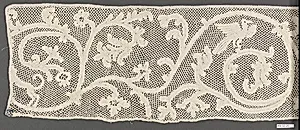
Step into the intricate world of 17th Italian lace-making with *Border*, a stunning example of bobbin lace crafted by an unknown artist. This elongated piece, measuring an impressive 122½ inches long by 8 inches wide, features delicate motifs of animals and birds, rendered with exquisite precision. Housed in the Metropolitan Museum of Art's European Sculpture and Decorative department, it was generously donated as an anonymous gift in1949. Bobbin lace, a technique originating in Europe during the Renaissance, involves twisting and intertwining threads held on handheld bobbins to create openwork patterns. Italian artisans excelled in this medium during the Baroque era, producing luxurious textiles that adorned elite wardrobes, ecclesiastical vestments, and household linens. The narrow, extended format of this border suggests it was designed as an edging for garments, curtains, or altar cloths, showcasing the era's fascination with nature-inspired designs—birds in flight and animals in playful vignettes—symbolizing abundance and vitality. What makes *Border* particularly captivating is its technical mastery: each motif emerges from a complex interplay of threads, demanding patience and skill from lacemakers, often women working in specialized workshops. As a cultural artifact, it reflects Italy's dominance in the lace trade, a booming industry that fueled fashion and diplomacy across Europe. A true testament to forgotten craftsmanship, this piece invites you to marvel at the fleeting elegance of threads frozen in time.