
Border
Unknown Artist
late 17th century
Medium
Needle lace, Point de France
Dimensions
L. 108 x W. 5 3/4 inches (274.3 x 14.6 cm)
Classification
Textiles-Laces
Culture
French
Department
European Sculpture and Decorative Arts
Museum
Metropolitan Museum of Art, New York, NY
Credit
Gift of Baroness Fanny Hatvany, 1952
Accession Number
52.55.2
Rights
Public Domain
Tags
Art Historical Context
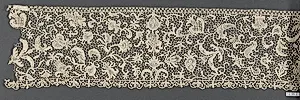
Step into the opulent world of 17th-century France with *Border*, a stunning example of Point de France needle lace from the late 1600s. This exquisite textile strip, measuring an impressive 108 inches long 5¾ inches wide, was crafted by an unknown artist whose skilled hands wove delicate floral motifs—a hallmark of the era's decorative elegance. Likely used to adorn garments, altar cloths, or furnishings for the elite, its slender form evokes the grandeur of Versailles and the court of Louis XIV. Point de France, named for its royal patronage, represented the pinnacle of French lace-making during the Baroque period. Developed to rival Italian imports, this needle lace technique involved meticulously stitching fine linen threads with a needle to create raised, sculptural patterns of blooming flowers and intricate designs. Promoted by Finance Minister Jean-Baptiste Colbert, it symbolized national pride and luxury, often costing more than gold. The meticulosity required made it a status symbol, reserved for nobility and clergy. Today, this rare survivor graces the Metropolitan Museum of Art's European Sculpture and Decorative Arts collection, gifted by Baroness Fanny Hatvany in 1952. It invites us to marvel at the unseen labor of artisans, preserving a fleeting art form that once defined French sophistication.