
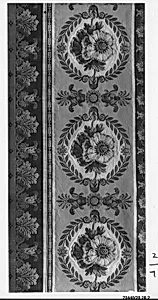
Border for wall fabric
1813
Medium
Silk and metal thread
Dimensions
L. 28 x W. 14 1/2 inches (71.1 x 36.8 cm)
Classification
Textiles-Woven
Culture
French, Lyons
Department
European Sculpture and Decorative Arts
Museum
Metropolitan Museum of Art, New York, NY
Credit
Rogers Fund, 1928
Accession Number
28.28.2
Rights
Public Domain
Tags
Art Historical Context
This exquisite *Border for Wall Fabric*, woven in 1813 by the Lyons firm Séguin et Cie, exemplifies the pinnacle of French silk production during the early 19th century. Hailing from Lyons—Europe's silk capital—the piece measures 28 by 14½ inches and features delicate floral motifs, rendered in luxurious silk and shimmering metal threads. As a woven textile border, it was designed to elegantly frame larger wall hangings or upholstery, adding opulence to grand interiors of the Napoleonic and Restoration eras. Lyons weavers, empowered by Joseph-Marie Jacquard's revolutionary loom (patented in 1801), mastered intricate patterns like these blooming flowers without manual intervention, blending artistry with industrial innovation. The use of metal threads—likely gold or silver—created a luminous effect, heightening the fabric's tactile and visual appeal for elite homes and palaces. Acquired through the Rogers Fund in 1928 and now in the Metropolitan Museum of Art's European Sculpture and Decorative Arts collection, this border captures the cultural prestige of French textiles. It reflects Lyons' enduring legacy as a hub of technical virtuosity and aesthetic refinement, where silk weaving was both economic powerhouse and symbol of national elegance.