
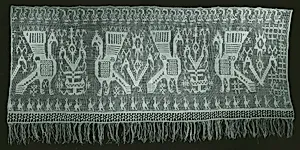
Border Fragment
Unknown Artist
17th–18th century
Medium
Linen
Dimensions
22 x 46 1/2 in. (56.2 x 118.5 cm) with fringe
Classification
Textiles-Laces
Culture
Italian
Department
Robert Lehman Collection
Museum
Metropolitan Museum of Art, New York, NY
Credit
Robert Lehman Collection, 1975
Accession Number
1975.1.1789
Rights
Public Domain
Tags
Art Historical Context
This delicate *Border Fragment*, crafted from fine linen by an unknown Italian artist in the 17th or 18th century, the artistry of Renaissance and Baroque lace-making traditions. Measuring 22 x 46½ inches with elegant fringe, it likely served as an ornamental edge for garments, altar linens, or household textiles—status symbols among Europe's elite. The inclusion of bird motifs, a popular decorative tag in period textiles, evokes nature's grace, adding whimsy and symbolism to everyday luxury. Italian lace from this era, classified as *Textiles-Laces*, was renowned worldwide for its intricate techniques, such as needlepoint (*punto in aria*) or bobbin lace, which allowed for airy, sculptural designs on durable linen threads. These methods demanded extraordinary skill, transforming humble fiber into filigree masterpieces that rivaled painting or sculpture in finesse. Housed in the Robert Lehman Collection at The Metropolitan Museum of Art since 1975, this fragment highlights Italy's pivotal role in exporting lace techniques that shaped global fashion and decorative arts. Visitors will appreciate how such pieces whisper of opulent courts and convent workshops, where women artisans wove threads of history into tangible beauty. A testament to anonymous mastery, it invites us to marvel at the unseen hands behind enduring elegance.