
Bottle
Unknown Artist
probably 18th–19th century
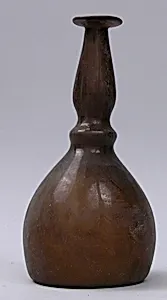
Medium
Glass; mold and optic blown; tooled on the pontil
Dimensions
H. 6 3/8 in. (16.2 cm) Max. Diam. 3 1/8 in. (8 cm)
Classification
Glass
Department
Islamic Art
Museum
Metropolitan Museum of Art, New York, NY
Credit
Edward C. Moore Collection, Bequest of Edward C. Moore, 1891
Accession Number
91.1.1211
Rights
Public Domain
Art Historical Context
This delicate glass bottle, hailing from the Islamic Art collection at the Metropolitan Museum of Art exemplifies the refined craftsmanship of 18th19th century glassmakers in the Islamic world. just 6 3/8 inches tall with a maximum diameter of 1/8 inches, its modest size suggests it was likely used for perfumes, oils, or spices—essentials in daily life and trade across the Ottoman Empire and beyond. The anonymous artist's mastery shines through in the medium: mold- and optic-blown glass, where molten glass is blown into patterned molds to create optical ribbing effects, then tooled smooth on the pontil mark for a polished finish. Islamic glass production during this era was renowned for its technical innovation, blending utility with subtle elegance. Techniques like mold-blowing allowed for repeatable decorative motifs, while optic blowing produced mesmerizing light-refracting patterns that enhanced the bottle's allure. Free from heavy gilding or enameling common in earlier periods, this piece reflects a shift toward minimalist sophistication, possibly from regions like Syria or Egypt. Gifted through the Edward C. Moore Collection in 1891, this bottle invites us to appreciate the everyday artistry of Islamic artisans, whose wares traveled Silk Road routes, influencing global design. A quiet gem, it whispers of cultural exchange and enduring beauty in simple forms.