
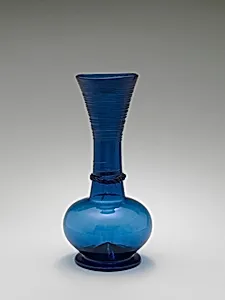
Bottle
Unknown Artist
probably 18th–19th century
Medium
Glass; blown, applied decoration, tooled on the pontil
Dimensions
H. 10 11/16 in. (27.1 cm) Max. Diam. 5 1/16 in. (12.9 cm)
Classification
Glass
Department
Islamic Art
Museum
Metropolitan Museum of Art, New York, NY
Credit
Edward C. Moore Collection, Bequest of Edward C. Moore, 1891
Accession Number
91.1.1580
Rights
Public Domain
Art Historical Context
This elegant glass bottle, hailing from the Islamic world and likely crafted in the 18th or 19th century, exemplifies the refined artistry of traditional glassmaking in the region. Standing at just over 10 inches tall with a maximum diameter of about 5 inches, it have served practical purposes such as holding perfumes, oils, or—essentials in daily life and trade across the Ottoman Empire, Persia, or nearby cultures. Its presence in the Metropolitan Museum of Art's Islamic Department highlights the enduring appeal of these vessels, preserved through the generosity of the Edward C. Moore Collection in 1891. Crafted using free-blowing techniques, the bottle was shaped by inflating molten glass at the end of a blowpipe, a method perfected by Islamic artisans centuries earlier. Delicate applied decoration—such as trails or prunts of contrasting glass—was added while hot, then tooled for precision, with a distinctive pontil mark on the base where it was detached from the glassmaker's rod. This labor-intensive process not only ensured durability but also allowed for vibrant, textured surfaces that caught the light, reflecting the cultural value placed on beauty in everyday objects. Though the artist remains unknown, this bottle whispers of a vibrant tradition where functionality met artistry, inviting us to imagine bustling bazaars filled with such treasures.