
Bottle
Unknown Artist
probably 18th–19th century
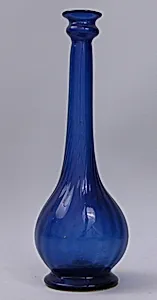
Medium
Glass; mold blown
Dimensions
H. 9 1/8 in. (23.2 cm) Diam. 3 3/16 in. (8.1 cm) Wt. 5.096 oz. (144.469 g)
Classification
Glass
Department
Islamic Art
Museum
Metropolitan Museum of Art, New York, NY
Credit
Edward C. Moore Collection, Bequest of Edward C. Moore, 1891
Accession Number
91.1.1593
Rights
Public Domain
Art Historical Context
This elegant glass bottle, likely crafted in the 18th or 19th century, the refined artistry of Islamic glassmaking. Standing at just over 9 inches tall with a slender diameter of about 3 inches, its lightweight form (weighing a mere 5 ounces) it was designed for practical yet luxurious use—perhaps to hold perfumes, oils, orwater, staples in Ottoman or Persian households. The mold-blown technique, a hallmark of the period, involved blowing molten glass into a patterned mold, creating textured surfaces or subtle motifs that catch the light beautifully without the need for additional decoration. In the Islamic world, glass vessels like this were prized for their transparency and versatility, bridging utility and aesthetics. Mold-blowing allowed artisans to produce intricate designs efficiently, reflecting a cultural emphasis on geometric and organic patterns inspired by nature and calligraphy. Though the artist remains unknown, such bottles highlight the technical prowess of workshops in regions like Syria, Egypt, or Anatolia, where glass production flourished amid trade routes exchanging ideas and materials. Now part of the Metropolitan Museum of Art's Islamic Art collection, this piece entered through the generous bequest of Edward C. Moore in 1891. Visitors will appreciate its delicate iridescence, a testament to enduring craftsmanship that invites closer inspection under gallery lights.