
Bottle
Unknown Artist
10th century
Medium
Cut glass
Dimensions
H. 10 in. (25.4 cm) Diam. 5 3/4 in. (14.6 cm)
Classification
Glass
Department
Islamic Art
Museum
Metropolitan Museum of Art, New York, NY
Credit
Harris Brisbane Dick Fund, 1965
Accession Number
65.52.1
Rights
Public Domain
Art Historical Context
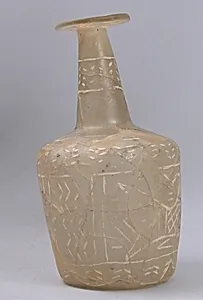
This elegant 10th-century bottle, crafted from cut glass, exemplifies the refined artistry of the Islamic world during the medieval period. Standing at 10 inches tall with a diameter of 5¾ inches, its graceful form suggests it was designed as both a functional vessel—perhaps for perfumes or oils—and a luxurious decorative. The unknown artisan's mastery is evident in the cut glass medium, a labor-intensive technique where designs were meticulously incised into the surface using grinding wheels, creating sparkling facets that catch the light. Cut glass vessels like this one were a hallmark of Islamic innovation in the 9th–11th centuries, particularly in regions like Iraq, Egypt, and Syria under Abbasid or Fatimid patronage. This method elevated everyday glassware to status symbols, rivaling precious metals in opulence. The bottle's intricate patterns, though worn by time, likely featured geometric motifs or arabesques, reflecting Islamic aesthetics that emphasized harmony and infinity. Housed in the Metropolitan Museum of Art's Islamic Art department through the Harris Brisbane Dick Fund (1965), this bottle invites us to marvel at the anonymous genius of medieval craftsmen. It stands as a testament to a golden age of glassmaking, where technology and beauty intertwined seamlessly.