
Bottle
Unknown Artist
17th century
Medium
Stonepaste; painted under transparent glaze
Dimensions
H. 4 1/4 in. (10.8 cm) Diam. 4 1/2 in. (11.4 cm)
Classification
Ceramics
Department
Islamic Art
Museum
Metropolitan Museum of Art, New York, NY
Credit
Gift of Dr. and Mrs. Lewis Balamuth, 1971
Accession Number
1971.105.2
Rights
Public Domain
Art Historical Context
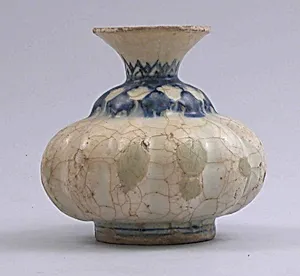
This delicate 17th-century bottle, crafted from stonepaste and painted under a transparent glaze exemplifies the refined ceramics of the Islamic world. Standing just 4¼ inches tall and 4½ inches in, its modest size suggests it may have held perfumes, oils, or spices—everyday luxuries transformed into art. Housed in the Metropolitan Museum of Art's Islamic department, it reflects the era's mastery of pottery, a medium prized for its ability to convey cultural elegance. Stonepaste, also known as fritware, a groundbreaking Islamic innovation from the medieval period, blending quartz, clay, and glass frit to create a white, porcelain-like body resilient to the region's arid climates. By the 17th century, during dynamic periods like the Safavid dynasty in Persia, potters perfected this technique, firing vessels at high temperatures for durability and translucency. The underglaze painting method—colors applied directly to the unfired body before glazing—ensured vibrant, lasting designs protected by a glossy sheen. Though the artist's identity is unknown, such bottles highlight Islamicate artisans' ingenuity, blending utility with aesthetic sophistication for domestic and ceremonial use. A gift to the Met in 1971, it invites us to appreciate the subtle beauty of overlooked objects.