
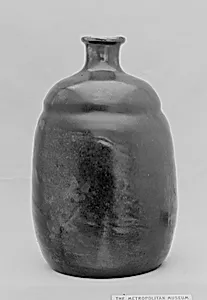
Bottle
Unknown Artist
18th century
Medium
Clay covered with a mottled glaze and an overglaze (Takatori ware, Satsuma type)
Dimensions
H. 7 5/8 in. (19.4 cm); Diam. 5 in. (12.7 cm); Diam. of rim 1 1/2 in. (3.8 cm); Diam. of foot 3 3/4 in. (9.5 cm)
Classification
Ceramics
Culture & Period
Japan · Edo period (1615–1868)
Department
Asian Art
Museum
Metropolitan Museum of Art, New York, NY
Credit
Gift of Mr. and Mrs. Samuel Colman, 1893
Accession Number
93.1.146
Rights
Public Domain
Art Historical Context
This elegant bottle, crafted in 18th-century Japan during the Edo (1615–1868), exemplifies the refined artistry of Takatori ware in the Satsuma type Standing at just 7⅝ inches tall with a 5-inch diameter, its modest scale belies its sophisticated form: a bulbous body tapering to a narrow neck and footed base, ideal for practical use like storing sake or oils while doubling as a decorative object. Takatori ware, produced in the Fukuoka region, is renowned for its distinctive mottled glazes—created by layering clay with ash-based glazes fired at high temperatures, yielding earthy, speckled tones of green, brown, and cream. The added overglaze enhances durability and sheen, showcasing Edo-era potters' mastery of kilns and natural materials during a time of cultural flourishing and peace under the Tokugawa shogunate. Such ceramics reflected Japan's aesthetic harmony of wabi-sabi, embracing imperfection in glaze variations. A gift to the Metropolitan Museum of Art from Mr. and Mrs. Samuel Colman in 1893, this anonymous masterpiece invites visitors to ponder the anonymous hands behind Japan's enduring ceramic legacy, bridging utility and beauty in everyday life.