
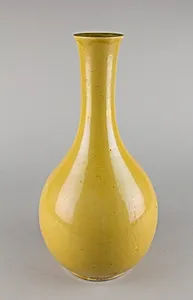
Bottle
Unknown Artist
Medium
Porcelain
Dimensions
H. 15 1/2 in. (39.4 cm)
Classification
Ceramics
Culture & Period
China · Qing dynasty (1644–1911), Kangxi period (1662–1722)
Department
Asian Art
Museum
Metropolitan Museum of Art, New York, NY
Credit
Bequest of Mary Clark Thompson, 1923
Accession Number
24.80.555
Rights
Public Domain
Art Historical Context
This elegant porcelain bottle hails from China's Qing dynasty during the Kangxi period (2–1722), a golden era of artistic refinement under Emperor Kangxi. Standing at 15½ inches (39.4 cm) tall, it exemplifies the masterful ceramics produced at Jingdezhen, the imperial porcelain capital, where potters achieved unprecedented technical precision in form and firing. Though the artist remains unknown, such vessels were crafted for both practical use—like storing wine or oils—and as symbols of luxury for elite households or export. Porcelain from this time is celebrated for its translucent white body, achieved through kaolin clay and high-temperature kilns, often adorned with vibrant underglaze blue or overglaze enamels (famille verte). This bottle reflects the Kangxi reign's innovation, blending functionality with aesthetic harmony, and contributed to China's dominance in global trade—porcelain was dubbed "white gold" by Europeans. A generous bequest to the Metropolitan Museum of Art in 1923 by Mary Clark Thompson preserves this treasure, inviting us to appreciate the enduring legacy of Chinese ceramic artistry in the Asian Art department.