
Bottle
Unknown Artist
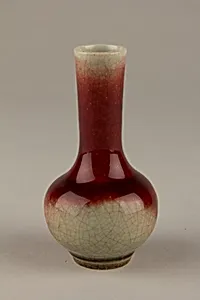
Medium
Porcelain
Dimensions
H. 4 1/4 in. (10.8 cm)
Classification
Ceramics
Culture & Period
China · Qing dynasty (1644–1911), Kangxi period (1662–1722)
Department
Asian Art
Museum
Metropolitan Museum of Art, New York, NY
Credit
Bequest of Benjamin Altman, 1913
Accession Number
14.40.57
Rights
Public Domain
Art Historical Context
This delicate porcelain bottle, standing just 4¼ inches tall, hails from China's Qing dynasty during the Kangxi period (1662–1722), a golden era for ceramic artistry. Produced likely at the imperial kilns of Jingdezhen, the epicenter of porcelain production, it exemplifies the technical mastery of the time. Chinese porcelain, made from fine kaolin clay and fired at high temperatures, achieved a translucent, resonant quality that captivated the world and fueled global trade. Though the artist remains unknown, the bottle reflects the Kangxi reign's innovation and refinement in ceramics, often featuring intricate designs for both domestic use and export. Small vessels like this served practical purposes—holding oils, spices, or cosmetics—while doubling as elegant decorative objects, symbolizing status and the emperor's patronage of the arts. Generously bequeathed to the Metropolitan Museum of Art in 1913 by Benjamin Altman, this piece invites us to appreciate the enduring legacy of Chinese craftsmanship, bridging centuries of cultural exchange.