
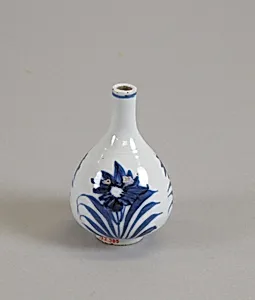
Bottle
Unknown Artist
first half of the 19th century
Medium
Porcelain painted in underglaze blue
Dimensions
H. 3 1/8 in. (7.9 cm)
Classification
Ceramics
Culture & Period
China · Qing dynasty (1644–1911)
Department
Asian Art
Museum
Metropolitan Museum of Art, New York, NY
Credit
Purchase by subscription, 1879
Accession Number
79.2.385
Rights
Public Domain
Tags
Art Historical Context
This delicate porcelain bottle, crafted in China during the first half of the 19th century amid the Qing dynasty (1644–1911), exemplifies era's mastery of blue-and-white ceramics. Standing just 3 1/8 inches (7.9 cm) tall, it features underglaze blue painting—a technique where cobalt pigment is applied to the unfired clay body before a transparent glaze is added and the piece is fired at high temperatures. This method, perfected over centuries, yields vibrant, enduring blues that resist fading, making such wares prized for both daily use and export. Floral motifs, hinted at in its design, were a hallmark of Qing porcelain, symbolizing abundance and harmony in Chinese culture. These small bottles often served practical purposes like holding perfumes, medicines, or oils, blending utility with artistry. Produced in imperial kilns or private workshops, they reflect the dynasty's porcelain boom, fueled by global trade via ports like Canton. Acquired by subscription in 1879, this bottle now graces the Metropolitan Museum of Art's Asian Art collection, offering visitors a tangible link to Qing ingenuity and the timeless allure of Chinese ceramics.