
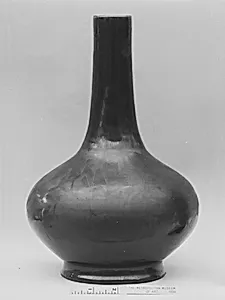
Bottle
Unknown Artist
Medium
Porcelain
Dimensions
H. 11 1/2 in. (29.2 cm); Diam. 7 1/2 in. (19.1 cm)
Classification
Ceramics
Culture & Period
China · Qing dynasty (1644–1911), Qianlong period (1736–95)
Department
Asian Art
Museum
Metropolitan Museum of Art, New York, NY
Credit
H. O. Havemeyer Collection, Bequest of Mrs. H. O. Havemeyer, 1929
Accession Number
29.100.298
Rights
Public Domain
Art Historical Context
This elegant porcelain bottle hails from China's Qing dynasty during the Qianlong period (6–95), a age for imperial ceramics produced at the famed Jingdezhen kilns. at 11½ inches tall with a 7½-inch diameter, its balanced proportions reflect the refined aesthetic of the era, when porcelain craftsmanship reached extraordinary heights under Emperor Qianlong's patronage. Though the artist remains unknown, such vessels were often created by skilled anonymous artisans in state-sponsored workshops, embodying technical perfection in throwing, glazing, and firing. Porcelain like this was more than a practical container—it symbolized luxury and cultural prestige. The Qing court's insatiable demand drove innovations in translucent white bodies and vibrant decorations (though specifics here are undocumented), making these pieces coveted exports that shaped global tastes in ceramics. Bottles served for storing oils, spices, or even as scholarly display objects, blending utility with artistry. Acquired through the discerning H.O. Havemeyer Collection and bequeathed to the Metropolitan Museum of Art in 1929, this bottle invites us to appreciate the enduring legacy of Chinese porcelain mastery, a testament to an empire's artistic ambition.