
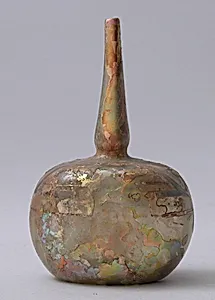
Bottle (Qumqum)
Unknown Artist
13th–14th century
Medium
Glass; blown, painted, tooled on the pontil
Dimensions
H. 53/8 in. (13.7 cm) Max. Diam. 3 1/4 in. (8.3 cm)
Classification
Glass
Department
Islamic Art
Museum
Metropolitan Museum of Art, New York, NY
Credit
Rogers Fund, 1906
Accession Number
06.1036.3
Rights
Public Domain
Art Historical Context
This elegant glass bottle, known as a *Qumqum*, hails from the Islamic world of the 13th–14th century, a golden age for decorative arts under Mamluk patronage. Standing just over 5 inches tall with a slender profile (maximum diameter 3¼ inches), it exemplifies the refined craftsmanship of medieval Islamic glassmakers, likely from Syria or Egypt. through the Rogers Fund in 6, it now graces the Metropolitan Museum of Art's Art collection. Crafted using the blown glass technique—where molten glass is inflated on a blowpipe—the bottle was then meticulously painted and tooled on the pontil (the iron rod used in blowing). This process allowed for delicate surface decoration, often with enamel or gilding, though specifics here highlight the tooled finishing for a smooth, precise form. Such bottles typically held perfumes, oils, or medicines, blending utility with artistry in everyday luxury. In Islamic culture, vessels like the *Qumqum* symbolized technical innovation and aesthetic sophistication, reflecting trade networks from the Mediterranean to Asia. Their survival underscores glass's durability and the era's mastery of transparency and color, inviting visitors to appreciate how form followed function in a vibrant, interconnected world.