
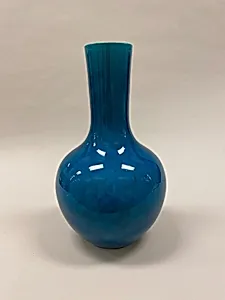
Bottle vase
Unknown Artist
18th century
Medium
Porcelain with turqoise blue glaze (Jingdezhen ware)
Dimensions
H. 13 7/8 in. (35.2 cm); Diam. 8 1/4 in. (21 cm)
Classification
Ceramics
Culture & Period
China · Qing dynasty (1644–1911)
Department
Asian Art
Museum
Metropolitan Museum of Art, New York, NY
Credit
Bequest of Benjamin Altman, 1913
Accession Number
14.40.179
Rights
Public Domain
Art Historical Context
This elegant bottle vase, crafted in the 18th during China's Qing dynasty (16441911), exemplifies the porcelain artistry of Jingdezhen, imperial kilns long revered as the world's porcelain capital. Standing at 13⅞ inches tall with a generous 8¼-inch diameter, graceful swelling form and slender neck made it ideal for floral displays or as a statement piece in scholarly studios and elite households. The unknown artist applied a striking turquoise blue glaze, a monochrome technique that highlights the potters' mastery over high-fired kilns, where subtle variations in color and texture emerged from precise control of copper oxide and firing conditions. Qing porcelain like this reached new heights of refinement under emperors such as Kangxi and Qianlong, blending technical innovation with aesthetic purity. Turquoise glazes, evoking serene skies or precious gems, were prized for their luminous depth and symbolic ties to harmony and prosperity in Chinese culture. Produced at Jingdezhen for both domestic connoisseurs and export markets, such vases embodied the dynasty's global influence on ceramics. Generously bequeathed to the Metropolitan Museum of Art in 1913 by Benjamin Altman, this treasure invites visitors to appreciate the timeless allure of Chinese craftsmanship, where form, glaze, and history converge in quiet splendor.