
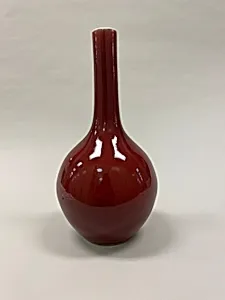
Bottle vase
Unknown Artist
18th century
Medium
Porcelain with copper red glaze (Jingdezhen ware)
Dimensions
H. 12 in. (30.5 cm); Diam. 6 in. (15.2 cm)
Classification
Ceramics
Culture & Period
China · Qing dynasty (1644–1911)
Department
Asian Art
Museum
Metropolitan Museum of Art, New York, NY
Credit
Bequest of Benjamin Altman, 1913
Accession Number
14.40.54
Rights
Public Domain
Art Historical Context
This elegant bottle vase, crafted in the 18th century during China's Qing dynasty (16441911), exemplifies the of imperial porcelain production at Jingdezhen, the renowned center for fine ceramics. Standing 12 inches tall with a 6-inch diameter its graceful form—narrow neck flaring to a rounded body and foot—is perfectly suited for displaying flowers or as a decorative scholar's object, reflecting the refined tastes of the era's elite. The vase's standout feature is its copper red glaze, a technically demanding monochrome effect achieved by firing copper oxide at precise high temperatures in a reducing atmosphere. This produced the prized "sang de bœuf" or oxblood hue, symbolizing vitality and imperial prestige. Jingdezhen kilns, under Qing patronage, perfected such innovations, making these wares highly sought after by collectors worldwide. Now housed in the Metropolitan Museum of Art's Asian Art Department through the 1913 bequest of Benjamin Altman, this anonymous masterpiece invites visitors to appreciate the fusion of artistry and alchemy in Qing porcelain, a testament to China's enduring ceramic legacy.