
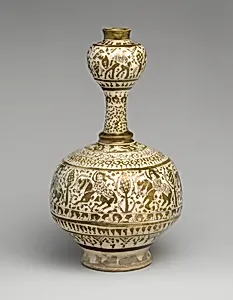
Bottle with Bulb-Shaped Neck
Unknown Artist
12th century
Medium
Stonepaste; luster-painted on opaque monochrome glaze
Dimensions
H. 13 in. (33 cm) Max. Diam. 7 1/2 in. (19.1 cm)
Classification
Ceramics
Department
Islamic Art
Museum
Metropolitan Museum of Art, New York, NY
Credit
Harris Brisbane Dick Fund, 1966
Accession Number
66.175.1
Rights
Public Domain
Tags
Art Historical Context
This exquisite 12th-century bottle from the Islamic world showcases the pinnacle of medieval ceramic artistry. Standing 13 inches tall with a distinctive bulb-shaped neck and a diameter of 7½ inches, it was crafted from stonepaste—a composite material of quartz, clay, and frit that allowed artisans to create thin, porcelain-like bodies resilient to the region's arid climate. The bottle's surface is adorned with luster-painting on an opaque monochrome glaze, a sophisticated technique where metallic oxides were applied over the fired glaze and reheated in a low-oxygen kiln to produce a shimmering, iridescent gold effect that catches the light like treasure. Originating likely from Persian or Syrian workshops—centers of innovation in Islamic ceramics—this vessel reflects the 12th century's cultural flourishing under dynasties like the Seljuks. Lusterware, introduced centuries earlier from Abbasid Iraq, symbolized luxury and technical mastery, often reserved for elite patrons. The decoration features lively horse motifs, evoking the nomadic heritage of steppe peoples and the Islamic veneration of equine grace, speed, and status in poetry and folklore. Acquired through the Harris Brisbane Dick Fund in 1966, this bottle now graces the Metropolitan Museum of Art's Islamic Art department, inviting visitors to marvel at how everyday forms became canvases for artistic brilliance.