
Bound print
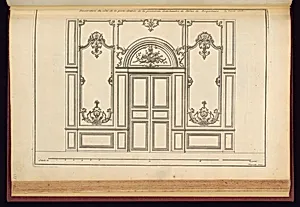
Medium
Bound print
Classification
Bound print
Department
Smithsonian Collection
Museum
Smithsonian American Art Museum
Credit
Purchased for the Museum by the Advisory Council
Accession Number
1921-6-539-169
Rights
Public Domain
About this artwork
Research in Progress
Art Historical Context
Jean Mariette (1660–1742), a renowned French engraver, print publisher, and art dealer, created this *Bound Print* in 1727 during the vibrant Regency era in France. Operating from his Paris shop, Mariette was a pivotal figure in the burgeoning art market, amassing vast collections of prints that he meticulously bound into albums. These compilations served as luxurious references for collectors, artists, and connoisseurs, reflecting the era's fascination with reproductive prints—detailed engravings after masterpieces by artists like Rubens or the Carracci. The medium of a "bound print" highlights innovative 18th-century preservation techniques. Prints, often etched or engraved on paper, were carefully mounted and sewn into leather-bound volumes to protect them from wear while allowing sequential viewing. This format elevated prints from ephemeral reproductions to treasured artifacts, influencing how visual knowledge circulated across Europe. Acquired for the Smithsonian American Art Museum through the Advisory Council's purchase, this work underscores Mariette's enduring legacy in print culture. Though research continues, it invites visitors to appreciate the meticulous craftsmanship and cultural exchange that defined French artistic life in the early 1700s.