
Bow
third quarter 16th century and ca. 1865–95
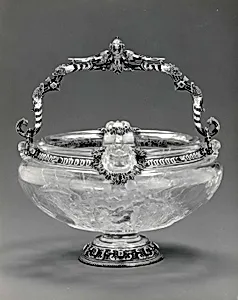
Medium
Rock crystal, cut on the wheel, enameled gold and diamonds.
Dimensions
H. 11.4 cm, h. with handle 20.3 cm, diam. 18 cm
Classification
Jewelry, Precious Metals and Precious Stones
Department
Robert Lehman Collection
Museum
Metropolitan Museum of Art, New York, NY
Credit
Robert Lehman Collection, 1975
Accession Number
1975.1.1496
Rights
Public Domain
Art Historical Context
Behold the exquisite *Bow* from the Robert Lehman Collection at the Metropolitan Museum of Art a masterful jewel blending Renaissance splendor with 19th-century ingenuity. Attributed to Reinhold V in an Italianate style, this piece dates to the third quarter the 16th century appearance and was crafted around 1865–95. 11.4 cm in height (20.3 cm with handle and 18 cm in, it showcases rock crystal meticulously cut on the wheel, adorned with enameled gold and sparkling diamonds—a nod to the opulent jewelry of Renaissance Europe. Rock crystal, prized for its clarity and durability, was wheel-cut in the 16th century to create intricate, translucent forms that mimicked precious gems, symbolizing wealth and refinement among nobility. Vasters, a skilled goldsmith, revived these techniques during the 19th-century Renaissance revival, producing objects that blurred the lines between historical artifact and modern masterpiece. The bow form, elegant and symbolic of love or festivity, exemplifies the era's fascination with antiquity, often worn as a brooch or ornament. This treasure highlights the cultural dialogue between past and present, inviting us to marvel at its technical precision and timeless allure. On view in the Department of Jewelry, Precious Metals and Precious Stones, it captivates with the shimmer of diamonds against translucent crystal—a true gem for any visitor.