
Bow Brooch
Unknown Artist
first half 6th century
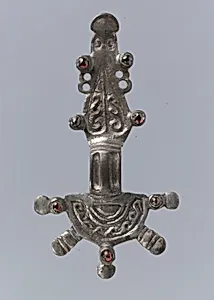
Medium
Silver-gilt, garnets cabochons
Dimensions
Overall: 2 5/16 x 4 3/16 x 1/2 in. (5.8 x 10.6 x 1.3 cm)
Classification
Metalwork-Silver
Culture
Ostrogothic
Department
Medieval Art
Museum
Metropolitan Museum of Art, New York, NY
Credit
Gift of J. Pierpont Morgan, 1917
Accession Number
17.192.149
Rights
Public Domain
Art Historical Context
Step into the world of the Ostrogoths with this exquisite *Bow Brooch*, a piece of metalwork from the first half of 6th century.ed by an unknown artist, this small yet striking accessory—measuring just 2 5/16 x 4 3/16 x 1/2 inches likely used to fasten cloaks garments, embodying the practical elegance of early medieval jewelry. Hailing from the Ostrogothic culture, which flourished in Italy under King Theodoric after the fall of Rome, it reflects the fusion of Roman sophistication and Germanic craftsmanship during the Migration Period. The brooch's medium of silver-gilt, adorned with cabochon garnets—smooth, polished gemstones set prominently—highlights advanced techniques in gilding and gem-setting. The silver base coated with a thin layer of gold created a luxurious shimmer, while the deep red garnets added vibrant color and prestige. Such garnets were prized in elite jewelry, symbolizing wealth and status among Ostrogothic nobility. Now part of the Metropolitan Museum of Art's Medieval Art collection, thanks to a 1917 gift from J. Pierpont Morgan, this brooch offers a tangible link to a transformative era. It showcases the high artistry of Ostrogothic metalworkers, bridging classical antiquity and the Middle Ages with its refined form and enduring allure.