
Bowl
Unknown Artist
ca. 1750
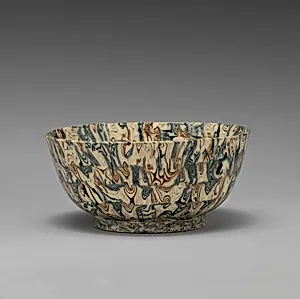
Medium
Agateware (glazed earthenware)
Dimensions
Height: 2 5/8 in. (6.7 cm); Diameter: 5 3/4 in. (14.6 cm)
Classification
Ceramics-Pottery
Culture
British, Staffordshire
Department
European Sculpture and Decorative Arts
Museum
Metropolitan Museum of Art, New York, NY
Credit
Gift of Mrs. Russell S. Carter, 1944
Accession Number
44.39.15
Rights
Public Domain
Art Historical Context
This elegant agateware bowl, crafted 1750 in Staffordshire, England, exemplifies the ingenuity of British potters during the height of the ceramic industry's rise. Measuring just 2⅝ inches tall and 5¾ inches in diameter, its compact form made it ideal for serving sweets, condiments, or as a trinket in affluent households. Produced by an unknown artist in the region's famed potteries, it hails from a time when Staffordshire became Europe's pottery capital, rivaling porcelain imports from China. The standout feature is its agateware medium—glazed earthenware where contrasting clays, often white and colored slips, are marbled together before firing to mimic the veined patterns of precious agate stone. This labor-intensive technique, perfected in the early 18th century by innovators like Thomas Whieldon, allowed affordable earthenware to imitate luxury materials, democratizing elegance for the growing middle class. The swirling, organic motifs evoke nature's beauty, blending functionality with artistry. Housed in the Metropolitan Museum of Art's European Sculpture and Decorative Arts department (gift of Mrs. Russell S. Carter, 1944), this bowl highlights Staffordshire's role in shaping global ceramics. Visitors will appreciate its tactile allure, a testament to 18th-century craftsmanship that turned clay into coveted treasures.