
Bowl
ca. 1753
Medium
Soft-paste porcelain
Dimensions
Diameter: 6 in. (15.2 cm)
Classification
Ceramics-Porcelain
Culture
British, Vauxhall
Department
European Sculpture and Decorative Arts
Museum
Metropolitan Museum of Art, New York, NY
Credit
Gift of Dr. and Mrs. A. L. Garbat, by exchange, 1997
Accession Number
1997.112
Rights
Public Domain
Tags
Art Historical Context
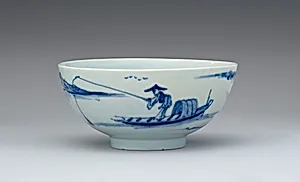
This elegant bowl, produced by the Vauxhallcelain Works in Britain around1753, exemplifies early English attempts to rival Chinese porcelain during the 18th-century ceramic boom. Crafted from soft-paste porcelain—a, translucent material blending ground glass, clay, and often bone ash—the 6-inch diameter piece was wheel-thrown and fired at lower temperatures than true hard-paste porcelain. Vauxhall, active from 1751 to 1758 near London's pleasure gardens, was one of England's pioneering factories, producing affordable luxury wares for the growing middle class. The bowl's charm lies in its hand-painted enamel decoration, featuring lively scenes of birds, men fishing from boats, evoking pastoral leisure and the Rococo taste for nature motifs. These underglaze colors, applied before a final glaze firing, capture a sense of whimsy and everyday delight, reflecting British fascination with oriental techniques adapted to local themes. Housed in the Metropolitan Museum of Art's European Sculpture and Decorative Arts department, this gift highlights Vauxhall's brief but innovative legacy. Though the factory closed amid competition from leaders like Chelsea and Bow, its soft-paste bowls remain treasured for bridging Eastern inspiration and Western ingenuity in decorative arts.