
Bowl
Unknown Artist
7th–10th century
Medium
Ceramic
Dimensions
H. 2 3/8 in. (6 cm)
Classification
Ceramics-Containers
Culture
Nopiloa
Department
Arts of Africa, Oceania, and the Americas
Museum
Metropolitan Museum of Art, New York, NY
Credit
Gift of Arthur M. Bullowa, 1979
Accession Number
1979.205.9
Rights
Public Domain
Tags
Art Historical Context
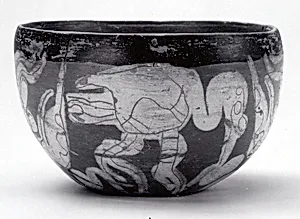
This delicate ceramic bowl, crafted by an unknown artist of the Nopiloa in ancient Mesoamerica between the 7th and 10th centuries, the refined pottery traditions of Veracruz, Mexico. Standing just 2 3/8 inches (6 cm) tall, its modest size suggests it served everyday purposes—perhaps for food or ritual offerings—while its bird motifs, a recurring tag in its description, hint at symbolic connections to the natural world, fertility, or spiritual beliefs common in pre-Columbian societies. Nopiloa ceramics are celebrated for their technical finesse, often featuring modeled or incised designs that bring animals to life on functional vessels. This bowl's survival speaks to the durability of earthenware fired in open kilns, a technique that allowed artisans to create lightweight, portable containers amid a vibrant trade network across ancient Mexico. Housed in the Metropolitan Museum of Art's Department of Arts of Africa, Oceania, and the Americas, it was generously gifted by Arthur M. Bullowa in 1979, offering visitors a tangible link to a lesser-known cultural chapter. Though small, this piece underscores the Nopiloa people's artistic ingenuity, blending utility with subtle storytelling through avian imagery that may evoke the skies or deities in their worldview. A quiet treasure in the vast tapestry of indigenous American art.