
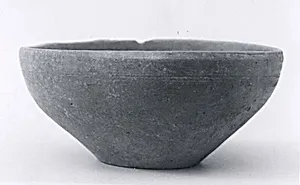
Bowl
Unknown Artist
2nd millennium BCE
Medium
Ceramic
Dimensions
2.32 in. (5.89 cm)
Classification
Ceramics-Vessels
Period
Middle–Late Bronze Age
Department
Ancient Near Eastern Art
Museum
Metropolitan Museum of Art, New York, NY
Credit
Gift of Warren A. Silver, 1954
Accession Number
54.55.12
Rights
Public Domain
Art Historical Context
This delicate ceramic bowl, dating to the Middle–Late Bronze Age (ca. 2000–1200 BCE), offers a glimpse into the daily life of the Ancient Near East—a cradle of early civilizations like Mesopotamia and the Levant. Standing just 2.32 inches (5.89 cm) tall, this modest vessel from the Metropolitan Museum of Art's Ancient Near Eastern Art collection was likely used for serving food, holding oils, or ritual purposes in households or temples. Its survival speaks to the enduring craftsmanship of a time when bronze tools revolutionized society, yet pottery remained essential for practical needs. Crafted from clay and fired in kilns, the bowl exemplifies Bronze Age ceramic techniques: probably wheel-thrown for symmetry and smoothed by hand for a refined finish. Though unadorned, such vessels highlight the potter's skill in creating functional beauty amid bustling trade networks that exchanged goods from the Mediterranean to the Persian Gulf. Simple forms like this one underscore cultural continuity, bridging nomadic traditions with emerging urban centers. Generously gifted to the Met in 1954 by Warren A. Silver, this unassuming artifact invites us to ponder the anonymous hands that shaped it millennia ago—reminders that art often began in the everyday.